Source Pneumatic Leather Hot Stamping Machine for Branding
Find and compare 30 pneumatic leather hot stamping machine options from China. Evaluate semi-automatic and automatic models with electric heating, varying temperatures up to 350°C, and multi-color capabilities for shoemaking and branding applications; compare the available evidence and request quotations based on your requirements.
Key considerations
Products List




Comprehensive Sourcing Guide
Pneumatic Leather Hot Stamping Machine Sourcing Guide
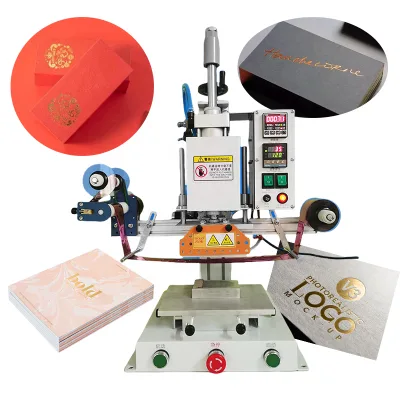
Buyers evaluating pneumatic leather hot stamping machines must first distinguish between semi-automatic and fully automatic configurations, as the supplied data indicates both grades are available in the market. The observed product range includes models specifically designed for shoemaking lines, utilizing artificial leather as the primary applicable material, while other listings suggest suitability for wood or general branding applications. This variation requires a clear definition of the intended production line to ensure the selected machine matches the specific workflow, whether it involves continuous stamping or intermittent operations.
The functional scope extends beyond simple branding to include complex hot pressing and foil stamping tasks, with some units offering multi-color printing capabilities alongside single-color options. Buyers should verify if the machine's structure, such as a platen press or letterpress plate type, aligns with the desired output quality and speed. Understanding these distinctions is critical before engaging with suppliers, as the difference between a machine optimized for high-efficiency automatic working and one designed for specific temperature ranges can significantly impact production throughput and final product consistency.
Product Scope and Observed Listing Signals
Market listings reveal a diverse array of specifications, with observed prices ranging from 210 to 29,000 USD, reflecting the wide variance in machine complexity and automation levels. The minimum order quantity is consistently observed at one piece, suggesting a market accessible to small workshops and large manufacturers alike, though the specific model chosen will dictate the final investment. Buyers must carefully cross-reference the listed price with the detailed technical attributes, such as the 1200W power consumption or the 220V/50-60Hz voltage requirement, to avoid purchasing units incompatible with their facility's electrical infrastructure.
Physical dimensions and packaging standards vary significantly across the catalog, with some models listed at 700x490x1330mm while others are described by plate sizes like 10x13cm or 20x30cm. The origin of these machines is primarily traced to Fujian and Guangdong provinces in China, with packaging ranging from standard export packing to wooden cases or boxes depending on the model. Procurement teams should prioritize verifying the exact product model number, such as KK-2203 or GS-QD2-1, to ensure the physical footprint and weight, which can reach 70kg, fit within their designated production floor space.
Technical Specifications to Verify
Temperature control is a critical parameter, with observed ranges spanning from 0-300°C to 0-350°C, necessitating precise verification against the thermal requirements of the specific leather or material being processed. The heating method is typically electric heat pipe heating, but the maximum pressing height of 100mm and the specific heating plate size must be confirmed to ensure the machine can accommodate the thickness of the workpieces. Buyers should demand detailed documentation on the temperature uniformity and stability, as these factors directly influence the quality of the hot stamping and the longevity of the heating elements.
The driving mechanism and operational speed are equally vital, with options including pneumatic operation and varying print speeds such as 7.5 CPI. The classification of the machine as either a continuous stamping machine or an intermittent type will determine the rhythm of the production line and the potential for bottlenecks. It is essential to validate the automatic grade, distinguishing between semi-automatic and fully automatic systems, and to confirm the plate type, whether letterpress or lithography, to ensure the machine can execute the specific branding or decorative patterns required for the final product.
Compliance and Safety Documentation
While specific certification status is not universally confirmed in the provided data, buyers must insist on comprehensive safety documentation that addresses electrical standards and mechanical safeguards. The presence of CE certification is a common expectation in the industry, but it should be verified as a current, valid document rather than assumed based on general market trends. Procurement teams should request test reports that validate the machine's compliance with local safety regulations, particularly regarding the high temperatures and pneumatic pressures involved in the operation.
Documentation regarding the machine's electrical safety is paramount, given the 220V voltage and 1200W power rating observed in the listings. Buyers should ensure that the supplier provides clear wiring diagrams, emergency stop protocols, and thermal overload protection details to mitigate risks associated with electric heat pipe heating systems. Additionally, any documentation related to the pneumatic system's pressure limits and the structural integrity of the platen press must be reviewed to guarantee that the equipment operates safely under the specified working conditions.
Cost Drivers and Commercial Terms
The final cost of a pneumatic leather hot stamping machine is heavily influenced by the level of automation, the precision of the temperature control system, and the complexity of the printing capabilities. Models offering multi-color printing or high-efficiency automatic working typically command higher price points compared to single-color, semi-automatic units. Buyers should analyze the total cost of ownership, including energy consumption and maintenance requirements, rather than focusing solely on the initial purchase price, as the 210-29,000 USD range indicates significant differences in long-term operational value.
Commercial terms such as the minimum order quantity of one piece offer flexibility, but buyers must negotiate clearly on shipping, insurance, and installation support. The origin of the machine, whether from Fujian or Guangdong, may impact logistics costs and lead times, which are not explicitly stated but should be clarified during the negotiation phase. It is advisable to request a detailed breakdown of costs, including the price of the wooden case or standard export packing, to ensure there are no hidden fees that could inflate the total landed cost of the equipment.
Supplier Qualification and Quality Control
Verifying the supplier's manufacturing capabilities is essential, as the market includes a mix of producers from different regions in China, each with varying levels of quality control. Buyers should assess the supplier's track record in producing machines with specific attributes like the 70kg weight or the 62x50x140 CM standard dimensions to ensure consistency in build quality. Requesting references from previous clients who have purchased similar models, such as the GS-QD2 or KK-2203, can provide insight into the supplier's reliability and the durability of their equipment in real-world production environments.
Quality control processes should extend beyond the final inspection to include checks on critical components like the pneumatic drive and the electric heating elements. Buyers must ensure that the supplier has a robust system for testing the temperature range and pressing height before shipment, as these are key performance indicators for the machine's functionality. Establishing a clear protocol for pre-shipment inspections and requiring a certificate of conformity for the specific model ordered will help mitigate the risk of receiving equipment that does not meet the specified technical requirements.
Long-Term Procurement Checks
Sustained operational efficiency depends on the availability of spare parts and the supplier's commitment to after-sales support. Buyers should verify the lead times for critical components such as heating plates, pneumatic valves, and control boards to prevent production downtime in the event of a failure. The specific model number should be used to confirm the availability of compatible parts, ensuring that the machine can be maintained effectively over its intended lifespan without relying on obsolete or hard-to-find components.
Training and technical support are also crucial for maximizing the utility of the pneumatic leather hot stamping machine. Buyers should negotiate for comprehensive training sessions that cover the operation of the semi-automatic or automatic grade, as well as troubleshooting procedures for common issues like temperature fluctuations or pressure inconsistencies. Establishing a long-term relationship with a supplier who provides ongoing technical assistance and updates on best practices will ensure that the investment continues to deliver high efficiency and consistent branding results over time.
FAQs
How does a pneumatic leather hot stamping machine work?
It uses compressed air to press a heated plate against leather with foil, transferring the design under controlled temperature and pressure. You set the temperature within the machine's range, position the material, and the pneumatic cylinder applies consistent force for each cycle. This delivers more uniform impressions than manual stamping, especially across repeated production runs on leather goods.
What temperature range do these hot stamping machines support?
Listed models operate between 0 and 300 degrees Celsius, while pneumatic hot foil stamping variants reach 0 to 350 degrees Celsius. This range suits artificial leather, wood, and similar materials that need different foil activation points. Always test on scrap material first, since excessive heat can scorch leather or damage the foil release layer.
Which materials can be stamped with a pneumatic hot foil machine?
The listed machines suit artificial leather for shoemaking lines, and some models are suitable for wood as well. Foil stamping generally works on leather, PU, PVC, paper, and plastics when the correct foil and temperature are selected. Confirm your specific substrate with the supplier, because foil type and plate material affect adhesion and finish quality.
Can these machines be customized for specific stamping requirements?
Yes, customization is listed as available for the featured models. Buyers can typically discuss heating plate dimensions, pressing height, voltage requirements, and branding functions with suppliers before ordering. Provide your material samples, desired logo size, and production volume so the manufacturer can confirm feasibility, adjust specifications, and quote accurately for your application.
What voltage and power do the listed stamping machines use?
The listed shoemaking-line model runs on 220V at 50 to 60Hz with 1200W power, heated by electric heat pipe heating. This configuration suits standard single-phase workshop power in most regions. Check your local supply compatibility before ordering, and note that heating method and wattage affect both warm-up time and temperature stability during continuous operation.
How are pneumatic hot stamping machines packed and shipped?
Packing methods listed include standard export packing, wooden case packing, and box packing, depending on the model. Wooden cases are common for heavier units, protecting the machine during long-distance freight. Confirm the exact packing type, gross weight, and dimensions with the supplier before arranging shipping, since packaging affects freight cost and handling requirements.
What is the minimum order quantity for these machines?
The listed minimum order quantity is 1 piece, so buyers can order a single unit for testing or small production. This suits workshops validating equipment before scaling up. Even at low quantity, discuss customization options, spare parts availability, and after-sales support, since single-unit orders still benefit from clear specification agreement with the supplier.
How do I choose between semi-automatic and automatic models?
The listing includes both semi-automatic and automatic grade machines. Semi-automatic models require manual loading and positioning, suiting small batches, varied designs, or workshops with lower volumes. Automatic models emphasize high efficiency for continuous runs and consistent output. Choose based on your daily production volume, operator availability, and how often you change stamping designs or materials.